Sports psychology practice: Working with athletes and teams


Published July 28, 2026

We admire athletes for their physical strength, yet some of an athlete’s most challenging battles can take place in their own mind. World-class athletes including Michael Phelps, Simone Biles, and Naomi Osaka have all spoken out about athletes’ mental health support.
These athletes are not alone; it’s estimated that around one in five collegiate athletes struggle with mental health issues such as depression, anxiety, and eating disorders. In the field of psychology, supporting athletes’ mental health necessitates a holistic view that treats the whole person rather than just the performer.
To address performance anxiety, clinicians can use evidence-based CBT and mindfulness to help athletes regulate physiological arousal and reframe performance stress.
A key component of athletes' mental health support is helping clients recognize when their stress levels enhance performance and when they begin to interfere with it. All stress is not created equal. For athletes, it can be helpful to think about stress through the perspective of states of arousal.
Clinically, we can utilize the Yerkes-Dodson model to look at how the various types of arousal can affect performance. This inverted-U theory of arousal explains that performance improves with a moderate amount of mental and physical stress, but once arousal is past optimal levels, anxiety begins, and performance decreases.
Effective athletes' mental health support includes helping clients recognize the difference between adaptive and maladaptive arousal so they can respond to stress in healthy, performance-enhancing ways.
Adaptive arousal: This middle ground of arousal can feel like the “butterflies” an athlete experiences before a game or event. Their increased heart rate and sharpened focus prime the body for action.
Maladaptive arousal: Underarousal leads to apathy, while overarousal (which athletes may refer to as “performance anxiety”) may lead to panic or rumination that results in a “freeze” state.
A holistic sports psychology practice uses evidence-based interventions to help athletes manage performance anxiety and strengthen their overall mental well-being.
Psychoeducation: Provide athletes with data on arousal states and reframe their physiological symptoms as a readiness cue rather than a threat signal.
Cognitive behavioral therapy (CBT): Utilize CBT strategies such as cognitive restructuring to identify and challenge cognitive distortions (e.g., catastrophizing) that may be fueling anxiety.
Mindfulness: Mindfulness-based interventions have been shown to support athletes’ mental health and athletic performance. Deep breathing exercises, visualization, and loving kindness meditations can all be helpful in supporting individuals before, during, and after competition.
An athletic culture of pushing the body to its limits no matter the cost can result in a dissociation between mind and body. In addition, when an athlete’s self-worth is tied directly to their physical accomplishments, an injury is more than just a physical malady—it can create a disruption in identity.
Research shows that individuals with a strong sense of athletic identity are at higher risk for post-injury depression than for individuals without a rigid tie to that identity. As clinicians, we can support athletes’ mental health by creating a multidimensional sense of self that includes values, interests, desires, and relationships outside of their sport.
In sports psychology practice, we can also expect athletes to experience a feeling of grief associated with their changing identity. Normalizing and providing education on the stages of grief (denial, anger, bargaining, sadness, and acceptance) can be helpful in destigmatizing the grieving process for clients.
Physical recovery from injury doesn’t always indicate readiness to return to play. In order to determine when an athlete is psychologically ready to return to their sport after injury recovery, a clinician should look for the presence of confidence and the absence of fear.
Using surveys such as the Injury Psychological Readiness to Return to Sport Scale (I-PRSS) can be a helpful tool in evaluating if clients are mentally ready to return. Athletes who return before they are psychologically ready are more likely to experience reinjury, depression, and ongoing anxiety.
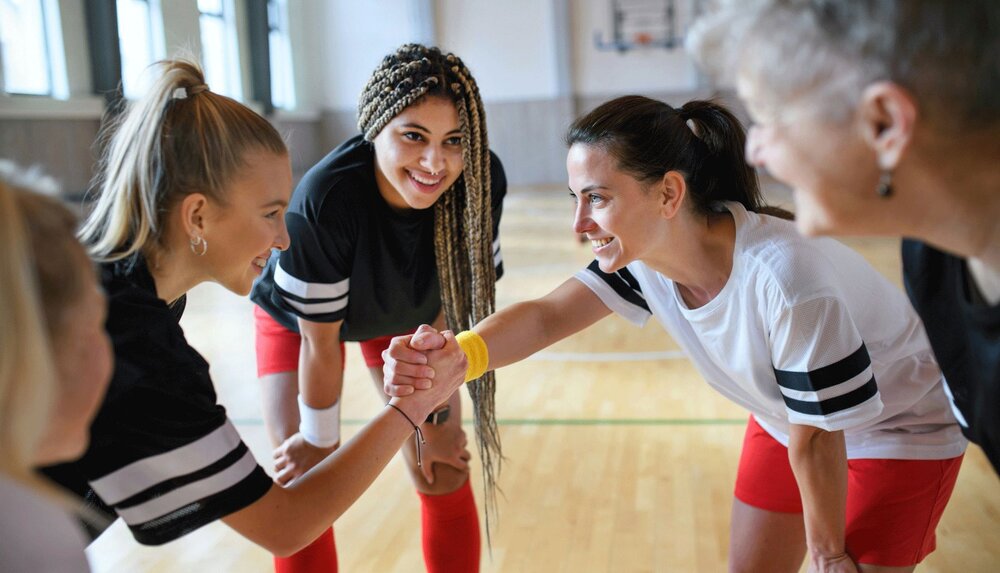
Team dynamics are complex and built upon two different types of cohesion: task cohesion (working towards the same goal) and social cohesion (personal connection). While liking teammates can be helpful, research shows that task cohesion is a stronger predictor of team performance.
Coaches play a pivotal role in developing the team dynamic and increasing task cohesion. The 3Cs theory looks at the athlete-coach relationship through the lens of:
Closeness (emotional experience): How trusting and respectful is the relationship?
Commitment (cognitive experience): How intentional are both parties in their willingness to maintain and grow the relationship?
Complementarity (behavioral experience): How well do coach and athlete communicate and collaborate during play?
Research indicates that the higher the relationship rates in the 3Cs, the more effective the relationship is. When working with coaches in sports psychology practice, framing mental health and relationship building as a key part of performance rather than an afterthought may help convince coaches to prioritize and support athletes’ mental health.
A sports psychology practice should help coaches understand that positive coach-athlete relationships strengthen emotional regulation, increase athletic participation, and support better team performance.
In a sports psychology practice, clinicians may work within larger organizations that have an interest in knowing what happens in the therapy room. Protecting the confidentiality of all clients, including athletes, is essential to successful treatment.
In all settings, practitioners and sports psychologists must abide by HIPAA, which protects the privacy of client health information. Clinicians should also be aware that state law and professional ethical codes—separate from HIPAA—may require disclosure in specific circumstances, such as imminent risk of harm to self or others, or suspected abuse. Because these requirements vary by state and licensure, clinicians should consult their state regulations and licensing board guidelines.
Should an athlete express a desire to connect their therapist with a coach or other provider, therapists should clearly define in the Release of Information which information will be communicated and with whom. This allows athletes to use therapy as a safe space to discuss the deepest parts of themselves without fear of it affecting their status on the team.
A healthy mind is just as important as a healthy body for an athlete. Effective athletes' mental health support includes evidence-based approaches such as CBT, mindfulness, and psychoeducation that foster emotional resilience.
By shifting the focus from performer to person, clinicians can help athletes succeed both on the field and long after their final competition.
Carron, A. V., Bray, S. R., & Eys, M. A. (2002). Team cohesion and team success in sport. Journal of sports sciences.
Edison, B. R., Christino, M. A., & Rizzone, K. H. (2021). Athletic Identity in Youth Athletes: A Systematic Review of the Literature. International journal of environmental research and public health.
Gomez-Espejo, V., Olmedilla, A., Abenza-Cano, L., Garcia-Mas, A., & Ortega, E. (2022). Psychological readiness to return to sports practice and risk of recurrence: Case studies. Frontiers in psychology.
Mountjoy M, Sloan S, Ali-Zada M, et al. (2025). International Olympic Committee consensus-driven guidelines for athlete mental health support at sporting events. British Journal of Sports Medicine.
Pan F and Sui W. (2025). Research on coach-athlete relationship and team performance based on 3Cs theory: the chain mediating role of emotional intelligence and athletic engagement. Front. Psychol.
Rosenfeld, L. B., & Richman, J. M. (1997). Developing effective social support: Team building and the social support process. Journal of Applied Sport Psychology.
Wang, Y., Lei, S. M., & Fan, J. (2023). Effects of Mindfulness-Based Interventions on Promoting Athletic Performance and Related Factors among Athletes: A Systematic Review and Meta-Analysis of Randomized Controlled Trial. International journal of environmental research and public health.
Yoon, J. J., & Petrie, T. (2023). Barriers to and Facilitators of Collegiate Athletes Seeking Mental Health Services. Journal of athletic training.
Zhao, Y., Zhang, H. (2025). The inverted-U relationship between stress and performance in elite shooting.
SimplePractice is HIPAA-compliant practice management software with everything you need to run your practice built into the platform—from booking and scheduling to insurance and client billing.
If you’ve been considering switching to an EHR system, SimplePractice empowers you to run a fully paperless practice—so you get more time for the things that matter most to you.
Try SimplePractice free for 30 days. No credit card required.
Stephanie Mahalec, LCSW is a psychotherapist based in Southern California. Prior to starting her private practice, Stephanie spent several years working in community mental health and specialized treatment settings. Stephanie is passionate about helping high-performing individuals navigate the unique mental health challenges that often accompany perfectionism. She holds an MSW from UCLA and a BA from Tufts University.






Proudly made in Santa Monica, CA © 2026 SimplePractice, LLC
Proudly made in Santa Monica, CA © 2026
SimplePractice, LLC