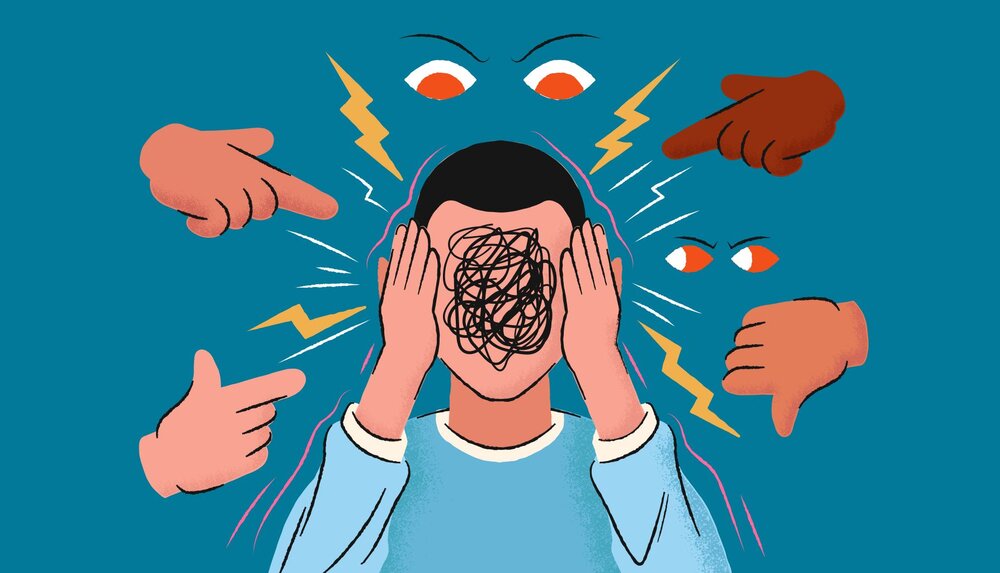
Cognitive therapy for social phobia


Published October 15, 2026

Emotionally focused therapy (EFT) is a couples therapy model that incorporates attachment theory with the goal of strengthening emotional bonds within relationships. Attachment theory was developed by John Bowlby in the 1960s as a way to explain how children develop connections with their caregivers. Though developed in the context of child development, the theory extends throughout the lifespan, emphasizing that the initial bond a person has with a caregiver provides a template for future relationships.
The theory posits that if a child receives consistent caregiving, they can develop a secure attachment and enter other relationships with a positive working model of trust and responsiveness. In essence, attachment theory, “places the individual in the context of his or her closest relationships with others…bonding with others is viewed as the most intrinsic survival strategy for human beings.”
A core piece of attachment theory that plays a large role in the therapeutic work of EFT is the understanding of one’s attachment pattern. Attachment styles are typically described with four different typologies: secure, preoccupied, fearful, and dismissing.
According to Eells, securely attached individuals have a strong sense that others will be available and supportive. Preoccupied (anxiously attached) individuals depend on external sources of validation and acceptance. Dismissing (avoidant) individuals see themselves as self-reliant and not needing to rely on others. Lastly, fearful (disorganized) individuals view others as uncaring and unavailable and see themselves as unlovable. Understanding how each partner in a relationship is wired with regard to attachment can help support emotionally focused therapy interventions to be successful.
Attachment theory in couples therapy provides the structural underpinnings to EFT, an increasingly popular and evidence-based treatment modality for couples therapy as well as individual (EFIT) and family therapy (EFFT).
EFT was developed in the 1980s by Sue Johnson and Leslie Greenberg. Johnson had studied in experiential and family therapies, but felt that many approaches didn’t highlight the essential components of emotion. As she and Greenberg worked more with couples, they noticed that there is often a “dance” or an interactional pattern the couple has. When you get underneath the pattern and find the emotional vulnerabilities, change can take place. Thus, EFT includes stages and steps that guide the treatment process. By 1985, the stages and steps of EFT were fully outlined and the testing process began. Ultimately, the first treatment manual for EFT couples therapy was published in 1988.
Emotionally focused therapy interventions have been widely studied and examined. According to Mirzazade et al. (2025), EFT was found to have a "significant effect on approximately 70% of cases…and in approximately 82% of these cases, the stability of the change has been confirmed during follow-up.”
Another study with 32 couples found that EFT for couples therapy reduced both avoidant and anxiety patterns of attachment and “significantly increased toward security” as well as relationship satisfaction.
For couples therapy with EFT, partners are able to de-escalate the negative interactional pattern through expression of needs and then improve their ability to express emotions to one another. The process can take a great deal of clinical attunement and development of trust, thus EFT is designed with certain stages and steps that guide relational repair and growth.
EFT for couples therapy is organized with stages and steps. Clinicians who seek training or certification in EFT will be trained extensively on this model and learn how to use these stages and steps throughout treatment.
EFT stages and steps are a roadmap for how clinicians can support the shift from disconnection to connection for couples. The stages and steps are as follows:
Step 1: Identify the conflict and core issues in the relationship.
Step 2: Identify the cycle where conflict is expressed.
Step 3: Access unacknowledged emotions that are underlying the reactive positions.
Step 4: Reframe the problem around the negative cycle rather than blaming each other.
Step 5: Promote identification of disowned needs.
Step 6: Promote acceptance of partner’s emotional experience and new way of relating.
Step 7: Facilitate expression of needs and wants.
Step 8: Facilitate new solutions to old relationship issues.
Step 9: Consolidate new secure attachment behaviors to ensure lasting change.
For many clinicians using EFT with couples, much of the time will often be spent in the assessment and de-escalation phase (stage one) as it takes time to elicit deep, unacknowledged emotions for each partner.
Moreover, a key aspect with EFT for couples therapy is repetition: when a client is able to connect, access, and express an emotion, this process is done over and over again so that emotion can exist in the relationship in a new way.
As couples are able to identify their negative relational pattern and shift from blaming each other, the therapist then shifts into helping the couple understand and accept the emotional experience of their partner. Ultimately, this promotes a new way of understanding and connecting, leading to a strengthened bond.
EFT is a highly humanistic type of therapy. Essentially, the core interventions center around the way the therapist uses their own ability to connect and develop a secure attachment with the couple in the therapy room.
As couples move through the stages and steps of treatment, the therapist is constantly repeating an intervention known as the EFT Tango. The EFT Tango is an intervention framework that EFT clinicians use no matter what stage of treatment is taking place. The EFT Tango involves five moves on the part of the therapist:
Move 1: Reflect present process (within/between).
Move 2: Explore slightly different, deeper, or new emotions.
Move 3: Set up/create enactment (pass primary emotion to their partner).
Move 4: Process the enactment.
Move 5: Integrate, validate, and reflect process.
The key for implementing these steps in couples therapy EFT is to move slowly and carefully so that there is ample space for processing. Enactments are a core piece of EFT. They are an intervention where the therapist guides the partners to communicate directly with one another. An enactment may “involve sharing feelings, fears, needs, or longings that can be difficult to express during everyday conversations.”
Other primary interventions that EFT therapists use include validation, emotional reflection, asking evocative questions, heightening images or words, and tracking (and reflecting back) the relational cycle.
Emotionally focused therapy is an excellent option for couples who are stuck, struggling with understanding one another, and experiencing chronic disconnection. While many couples therapy modalities are designed to improve relational experiences, EFT stands out as a model that is evidence-based and rooted in the relational science of attachment and connection.
Clinicians who are interested in learning more about this approach to therapy can take a course or training through the International Centre for Excellence in Emotionally Focused Therapy (ICEEFT).
Certification for EFT is offered for individual, couples, and family work. Depending on the pathway of your interest, certification can include taking a fundamentals course, completing an externship course, receiving supervision (with tape review), and completing an application for certification. Some pathways also require consultation times to discuss the application of the model. Regardless of your engagement with EFT, learning this model will equip clinicians with new skills and perspective on being a part of building healthy relationships in couples therapy.
Burgess-Moser, M., Johnson, S. M., Dalgleish, T. L., Lafontaine, M.-F., Wiebe, S. A., et al. (2015). Changes in relationship-specific attachment in emotionally focused couple therapy. Journal of Marital and Family Therapy.
Caffrey, C. (2024). Emotionally focused therapy (emotion-focused therapy). EBSCO Research Starters.
Eells, T. D. (2001). Attachment theory and psychotherapy research. Journal of Psychotherapy Practice and Research.
Greenberg, L. S., & Johnson, S. M. (1988). Emotionally focused therapy for couples. Guilford Press.
Hutchinson, J. (2023). Attachment theory. EBSCO Research Starters.
International Centre for Excellence in Emotionally Focused Therapy. (n.d.). What is EFT?
Johnson, S. M., Hunsley, J., Greenberg, L., & Schindler, D. (1999). Emotionally focused couples therapy: Status and challenges. Clinical Psychology: Science and Practice.
Koren, R., Woolley, S. R., Danis, I., & Török, S. (2022). Training therapists in emotionally focused therapy: A longitudinal and cross-sectional analysis. Journal of Marital and Family Therapy.
Lukin Center. (n.d.). EFT enactments: What they are and how they work.
Mirzazade, Z., Molazade, J., Hadianfard, H., & Taghavi, M. (2025). The effect of emotionally focused couple therapy (EFCT) on shame and intimacy in couples: A randomized controlled trial (RCT). BMC Psychology.
Rathgeber, M., Bürkner, P.-C., Schiller, E.-M., & Holling, H. (2019). The efficacy of emotionally focused couples therapy and behavioral couples therapy: A meta-analysis. Journal of Marital and Family Therapy.
Spengler, P. M., Lee, N. A., Wiebe, S. A., & Wittenborn, A. K. (2024). A comprehensive meta-analysis on the efficacy of emotionally focused couple therapy. Couple and Family Psychology: Research and Practice.
SimplePractice is HIPAA-compliant practice management software with everything you need to run your practice built into the platform—from booking and scheduling to insurance and client billing.
If you’ve been considering switching to an EHR system, SimplePractice empowers you to run a fully paperless practice—so you get more time for the things that matter most to you.
Try SimplePractice free for 30 days. No credit card required.
Heather Oglesby, M.A., MFTC, LPCC, NCC, is a relational therapist who supports individuals and couples to establish, build, maintain, and grow their emotional bonds with themselves and others. Heather sees healing as directly connected to emotional processing, awareness, and the ability to re-experience relationships in a new way. Her therapy practice is rooted in emotion-focused (EFT), narrative, attachment, humanistic, and strengths-based approaches. Additionally, she uses a systemic lens in the counseling process, seeing a person in the context of their values, intergenerational patterns, salient identities, and societal experiences. Heather has experience working in community mental health and residential programs, specializing in working with the LGBTQIA+ community. Prior to her training and work as a therapist, she spent seven years working in international development (including the U.S. Peace Corps) and non-profit management in East Africa. When not in the therapy room, you can find her writing and journaling, hiking in the mountains, rollerblading in the city, and spending time with her wife and cat, Moira.






Proudly made in Santa Monica, CA © 2026 SimplePractice, LLC
Proudly made in Santa Monica, CA © 2026
SimplePractice, LLC