How to use values cards in clinical practice


Published April 20, 2026
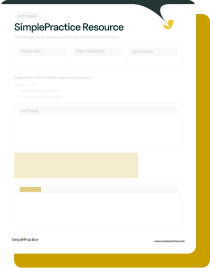
Download the free postcard activity template
Download now
Download the free postcard activity template
Download nowUse the postcard activity template to help clients externalize complex emotions through a blend of written expression and creative visual arts.
Implement this postcard art activity to treat conditions like depression and anxiety by reducing rumination and strengthening emotional regulation skills.
Provide clients with age-appropriate prompts that facilitate processing grief, resolving conflicts, or expressing gratitude without the pressure of a face-to-face encounter.
Download the structured worksheet to use as a versatile clinical tool for in-session exercises or as impactful homework between therapy appointments.
If you are a therapist seeking a creative way to enhance clinical sessions, this postcard activity template offers a versatile framework for deeper client breakthroughs.
By integrating the postcard art activity into your practice, you can help clients bridge the gap between internal reflection and external expression through both writing and visual media.
This article provides an overview of the postcard art activity, the benefits of this intervention, and examples of postcard activities to suggest to clients.
We’ve included a free downloadable postcard activity template that you can save to your electronic health record (EHR) and use in your practice.
The postcard activity is a therapeutic intervention used in art therapy, cognitive behavioral therapy (CBT), and narrative therapy to help clients express themselves by externalizing their thoughts in written form.
Sometimes, sharing thoughts and feelings in writing is easier than having a face-to-face conversation. The great thing about this exercise is that the client doesn’t have to send the postcard, but they still benefit from expressing themselves.
Here’s how the postcard art activity works:
On the postcard side, clients write a note in which they share their thoughts, express difficult emotions, and process grief. The postcard can be written to someone they are grieving, a friend or relative they miss, or someone they had a recent conflict with. They might share what they miss, what was upsetting, how a specific experience made them feel, or how they’d like to resolve the issue.
Clients can use the blank side of the postcard to create a visual or artistic representation of their message using different media, such as paint, pencil, photographs, collage, or anything else that feels appropriate.
Preliminary research has explored brief postcard interventions as a potential tool for managing depression in older adults, while broader therapeutic writing has shown promise in addressing anxiety and self-harming behaviors, though further outcomes research is needed across both areas.
Letter writing is also linked to a range of mental and physical health benefits, including:
Decreased rumination
Processing childhood traumas and emotional schemas
Strengthened emotional regulation skills
Reframing trauma narratives
Releasing difficult feelings and emotions
Finding meaning and acceptance in grief and loss
Promoting forgiveness and gratitude
Creating distance between difficult thoughts and feelings (psychological flexibility)
Clarifying life goals, meaning, and important values
Decreased intrusive thoughts
Increased self-awareness
The following postcard art activity examples contain age-appropriate prompts to suggest to clients.
Describe how the person hurt your feelings.
Write a note to someone you miss and tell them how much they mean to you.
What would you say to [a family member] if they were here?
Tell the person you miss what you did on vacation or how you are doing in school.
Create a picture of your favorite place, or attach a photo, and send it to someone you love, telling them what is special about it.
Create a visual representation of how you have grown in college and share how much you appreciate the experience.
Pick an image that represents your strengths in school and send it to someone you know who misses you while you’re at college.
Create a collage of the life you hope for once you graduate and send it to someone who has helped you attend college.
What do you want to say to someone that you might struggle to express in person?
Describe how much someone means to you.
What are your unmet needs in this relationship?
What does accountability mean to you, and how would you like the relationship repaired?
Write a letter to your future self about the challenges that you’re going through at the moment.
Create a visual representation of your core values that this person has not valued and share why these values are important to you.
Share three things that you are grateful for in this relationship.
Express the specific ways the conflict hurt you.
Describe how the person violated your boundaries and made you feel unsafe.
Write about how you experience your grief and loss, and what you miss about the person.
How can you find new ways to connect with the person you lost, even though they aren’t in the physical realm?
You can download and use the postcard activity template in several ways.
For example, print or screen share the worksheet to illustrate the activity in your session with the client.
Give the worksheet to the client to remind them of what you discussed during therapy. Ask the client to use the postcard activity template between sessions and share their reflections at their next therapy appointment.
Print copies of the postcard activity template and create a bundle of art therapy worksheets. Share the worksheet with other therapists or supervisees.
Imai, H., Furukawa, T. A., Okumiya, K., Wada, T., Fukutomi, E., et al. (2013). The postcard intervention against depression among community-dwelling older adults: study protocol for a randomized controlled trial. Trials.
Larsen L. H. (2024). Letter Writing as a Clinical Tool in Grief Psychotherapy. Omega.
Nyssen, O. P., Taylor, S. J. C., Wong, G., et al. (2016). Does therapeutic writing help people with long-term conditions? Systematic review, realist synthesis and economic considerations (Health Technology Assessment, No. 20.27). NIHR Journals Library.
Prasko, J., Diveky, T., Mozny, P., & Sigmundova, Z. (2009). Therapeutic letters – Changing the emotional schemas using writing letters to significant caregivers. Journal, 51.
Ruini, C., & Mortara, C. C. (2022). Writing Technique Across Psychotherapies-From Traditional Expressive Writing to New Positive Psychology Interventions: A Narrative Review. Journal of Contemporary Psychotherapy.
Tadros, E., Presley, S. & Ramadan, A. (2024). Dear John: Letter Writing as a Narrative Therapy Intervention. Trends in Psychology.
SimplePractice is HIPAA-compliant practice management software with everything you need to run your practice built into the platform—from booking and scheduling to insurance and client billing.
If you’ve been considering switching to an EHR system, SimplePractice empowers you to run a fully paperless practice—so you get more time for the things that matter most to you.
Try SimplePractice free for 30 days. No credit card required.






Proudly made in Santa Monica, CA © 2026 SimplePractice, LLC
Proudly made in Santa Monica, CA © 2026
SimplePractice, LLC