Goal exploration worksheet


Published July 8, 2026
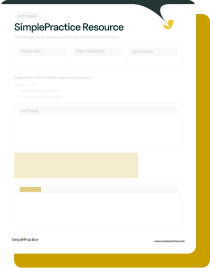
Download the strengths spotting worksheet
Download now
Download the strengths spotting worksheet
Download nowClinicians can download a free strengths spotting worksheet PDF to boost client self-esteem, improve depression symptoms, and enhance psychological well-being.
This resource explains how to measure positive traits using validated tools like the VIA Survey, CliftonStrengths, and specialized 20-item scales.
The included strengths spotting exercise provides actionable prompts to help individuals identify personal values and recognize positive attributes in others.
Using strengths spotting worksheets with clients is a great way to boost their self-esteem and overall well-being. This article provides an overview of strengths spotting exercises and includes an example activity.
We’ve also included a free downloadable character strengths worksheet PDF to save to your electronic health record.
Strengths spotting is a practice used to identify the skills and strengths of others. Character strengths are positively valued traits that reflect:
The core components of our personality
The way we relate to others
How we think, learn, and navigate challenges
How we self-regulate emotions
How we connect with the world
Used by coaches, therapists, and teachers, the process of identifying character strengths helps individuals connect with their values, boosts self-esteem, increases academic achievement, enhances psychological well-being, and can improve symptoms of depression.
There are several ways to identify strengths:
Through strengths-based worksheets, such as a strengths worksheet or a positive traits worksheet.
Discussing positive character traits or having them reflected in therapy sessions.
A strengths-spotting worksheet or exercise (see example below).
Taking the VIA Institute on Character Strengths Survey: This survey helps identify up to 24 individual character strengths, distilled into six core virtues: wisdom, courage, justice, humanity, temperance, and transcendence.
The Clifton Strengths Assessment, which identifies strengths of individuals and managers in school and workplace settings.
A strengths-spotting scale: A validated tool with 20 items and five sub-scales that identifies and recognizes strengths in others, which include:
The ability to spot strengths
Frequency of noticing strengths in others
Emotional response to recognizing strengths
How you act upon recognizing strengths
Motivation to notice strengths
Therapists can use strength spotting exercises or prompts to help clients identify their strengths and recognize the positive attributes in others by asking prompts like:
Can you describe a time when you did something really well and felt most proud of yourself?
What strengths did you recognize in yourself then?
How do you approach challenges?
How did acknowledging those strengths feel?
How might you use these strengths more in the future? Or with a current challenge?
What specific tasks come naturally to you?
What strengths did you notice in yourself today?
How did spotting that strength impact your day, mood, or interactions with others?
What traits have helped you to adapt and change?
What would it look like to identify your strengths every day? How might that impact your perspective?
What strengths or traits do you admire in others?
What did you notice?
How did recognizing these strengths impact your interaction with the person or others around them?
What does this strength mean to you?
How could you express appreciation for that person’s strengths?
Did recognizing their strengths impact your perspective?
In what ways could you use that strength in your life?
What are some ways you can continue to notice strengths in others moving forward?
How can you use this exercise to build stronger relationships?
You can download and use the strengths spotting worksheet in several ways:
Use the strengths activity as an icebreaker to focus the client’s attention on their strengths or what they admire in others.
Ask the client to use the strengths spotting worksheet between sessions and report their findings at their next therapy appointment.
Use the strengths spotting exercises in group therapy sessions to encourage clients to share more about themselves with other participants.
Combine this worksheet with other strengths-based worksheets, such as our positive traits worksheet, values worksheets, and 'Who Am I?' worksheet.
Share the worksheet with coworkers.
Use the strengths spotting worksheet as a discussion prompt with interns or supervisees.
American Psychological Association. (2018). Character strength.
Gander, F., Wagner, L., & Niemiec, R., M. (2024). Do character strengths-based interventions change character strengths? Two randomized controlled intervention studies. Collabra: Psychology.
Gallup. (2021). CliftonStrengths.
Niemiec, R. M., & Pearce, R. (2021). The Practice of Character Strengths: Unifying Definitions, Principles, and Exploration of What's Soaring, Emerging, and Ripe With Potential in Science and in Practice. Frontiers in Psychology.
VIA Institute on Character. (2025). VIA Character Strengths Survey.
VIA Institute on Character. (n.d.) Bring Out The Best In Yourself and Others with Strengths-Spotting.
Walker, P. (n.d.). A Focus on Strengths. Institute of Positive Psychology Coaching.
SimplePractice is HIPAA-compliant practice management software with everything you need to run your practice built into the platform—from booking and scheduling to insurance and client billing.
If you’ve been considering switching to an EHR system, SimplePractice empowers you to run a fully paperless practice—so you get more time for the things that matter most to you.
Try SimplePractice free for 30 days. No credit card required.






Proudly made in Santa Monica, CA © 2026 SimplePractice, LLC
Proudly made in Santa Monica, CA © 2026
SimplePractice, LLC