Exposure and response prevention worksheet


Published October 14, 2026
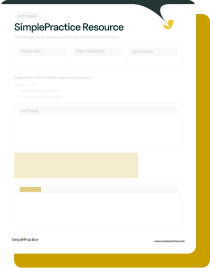
Download the ADHD sentence completion worksheet
Download now
Download the ADHD sentence completion worksheet
Download nowSentence completion worksheets can be used as a psychotherapy tool to boost self-esteem, as an icebreaker, or as an aid to prompt a client to share more about how they feel about their ADHD.
This article provides an overview of ADHD sentence completion worksheets, their benefits, and example question prompts.
We’ve included a free downloadable finish-the-sentence worksheet that you can save to your electronic health record (EHR) and use in your practice.
Sentence completion worksheets are a practical and structured way to prompt clients to share more about themselves and boost their self-esteem and confidence. This can be a beneficial exercise for children with ADHD, as they may struggle to organize their thoughts. Some kids may view their ADHD as a deficit, particularly when compared to peers at school, as they may be penalized for getting easily distracted, not paying attention, making mistakes, forgetting their homework, fidgeting in class, or struggling to complete tasks in the allotted time—all symptoms of this neurodevelopmental condition.
These prompts help kids reframe unhelpful thoughts and acknowledge their strengths and accomplishments. If used in a therapeutic setting, the prompts can lead to further discussion about ADHD, helping clients to understand their neurodivergence and identify areas they may need additional support and resources.
Example ADHD sentence completion prompts include:
The hardest part of my ADHD is ………………………………………………………………...
A good thing about my ADHD is…………………………………………………………………
Other people think ADHD is ……………………………………………………………………..
I believe ADHD is…………………………………………………………………………………
My ADHD superpower is ………………………………………………………………………..
I find it difficult to concentrate when …………………………………………………………….
I enjoy……………………………………………………………………………………………….
I am good at ……………………………………………………………………………………….
I get easily distracted by ………………………………………………………………………….
I know that other people are happy with me when they……………………………………….
I struggle at school because……………………………………………………………………..
I would do better in school if ……………………………………………………………………..
I find it hard to organize…………………………………………………………………………...
It is easier to finish tasks when…………………………………………………………………..
I would like more support with……………………………………………………………………
When I am overwhelmed, I tend to………………………………………………………………
My favorite way to relax is………………………………………………………………………..
Taking medication for ADHD helps me to……………………………………………………….
When I think about my friends, I sometimes feel………………………………………………
Today, I accomplished…………………………………………………………………………….
I wish I could tell my teacher……………………………………………………………………..
In the future I would like to ……………………………………………………………………….
One thing I want my friends to understand about me is ……………………………………...
When I am stuck, I ………………………………………………………………………………..
When things are hard, I tell myself ……………………………………………………………...
When I am having a hard time, I know I can talk to …………………………………………..
I feel confused about ……………………………………………………………………………..
I wish my parents knew …………………………………………………………………………..
I need extra time to complete…………………………………………………………………….
If I could change one thing about school, it would be ………………………………………..
You can download and use the ADHD sentence completion worksheet in several ways:
Use the worksheet to provide psychoeducation about ADHD and help clients express how they feel about their neurodivergence.
Complete the ADHD sentence completion exercise in session with the client and give them a copy to take home.
Ask the client to reflect on the worksheet and complete the ADHD sentence completion prompts between sessions and report their findings at their next therapy appointment.
Use the prompts in ADHD group therapy sessions to encourage clients to share more about themselves with other participants.
Combine this worksheet with other ADHD-related resources, including our ADHD handout guide, ADHD time management worksheet, guide to ADHD for parents, and "What is ADHD?" worksheet.
Share the ADHD sentence completion worksheets with coworkers or leave copies in your office.
Use this worksheet to provide training to interns or supervisees on ADHD and a strengths-based approach to supporting kids with neurodivergence.
Centers for Disease Control and Prevention. (2024). Treatment of ADHD.
Chacko, A., Merrill, B. M., Kofler, M. J., & Fabiano, G. A. (2024). Improving the efficacy and effectiveness of evidence-based psychosocial interventions for attention-deficit/hyperactivity disorder (ADHD) in children and adolescents. Translational Psychiatry.
Child Mind Institute. (n.d.). Complete guide to ADHD.
Children and Adults with Attention-Deficit Hyperactivity Disorder (CHADD). (n.d.). Parenting a child with ADHD.
Kohli, A., Jhanda, S., & Padhy, S. K. (2018). The utility of modified version of sentence completion test for children and adolescents. Industrial Psychiatry Journal.
Shaw, P., Eckstrand, K., Sharp, W., Blumenthal, J., Lerch, J. P., et al. (2007). Attention-deficit/hyperactivity disorder is characterized by a delay in cortical maturation. Proceedings of the National Academy of Sciences.
SimplePractice is HIPAA-compliant practice management software with everything you need to run your practice built into the platform—from booking and scheduling to insurance and client billing.
If you’ve been considering switching to an EHR system, SimplePractice empowers you to run a fully paperless practice—so you get more time for the things that matter most to you.
Try SimplePractice free for 30 days. No credit card required.






Proudly made in Santa Monica, CA © 2026 SimplePractice, LLC
Proudly made in Santa Monica, CA © 2026
SimplePractice, LLC