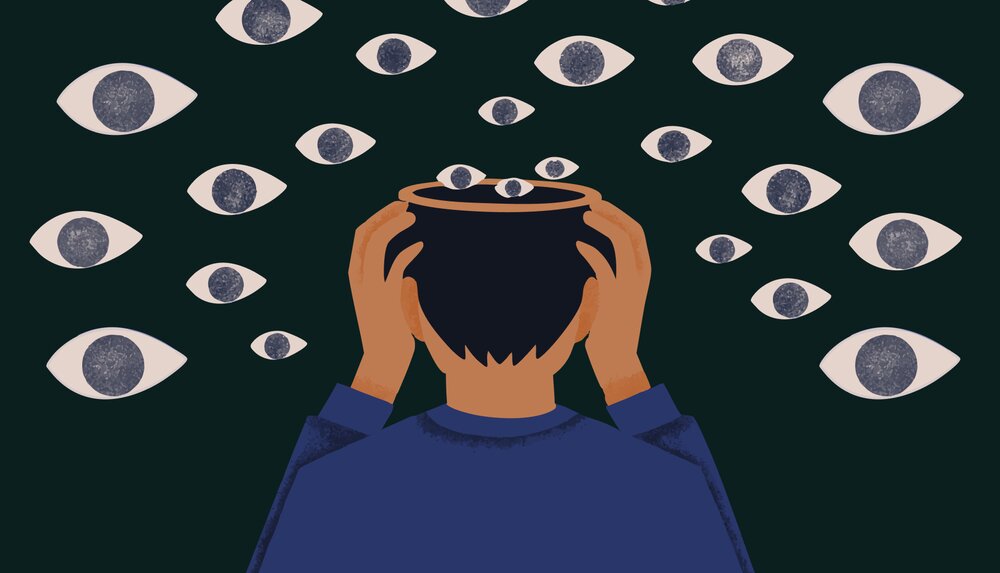
Reality testing psychosis worksheet

Published November 12, 2026
Download the coping with visual hallucinations worksheet
Download now
Download the coping with visual hallucinations worksheet
Download nowAs a therapist, you may be asked by clients how to stop visual hallucinations. This article provides an overview of psychosis and provides examples of visual hallucinations coping skills to suggest to clients.
We’ve included a free downloadable coping with visual hallucinations worksheet to save to your electronic health record (EHR) and use in your practice.
Psychosis is the umbrella term for several symptoms affecting a person’s thoughts and perception of reality. Several mental health disorders may include psychosis, including schizophrenia spectrum disorders, bipolar disorder, and severe depression. Psychosis may also occur as a result of medical conditions, like a brain injury, dementia, or as the result of substance use.
Visual hallucinations are not specific to psychiatric disorders and can also stem from neurological, vision-related, or other medical causes, so new or unexplained visual hallucinations warrant a medical evaluation.
Symptoms of psychosis include:
Hallucinations: Seeing or hearing things that are not real. Voices may tell a person to do something or may criticize them.
Delusions: Fixed false beliefs, such as the belief that someone is out to harm them or that they are receiving messages through the television.
Disorganized thinking or speech: Incoherent speech and tangential thoughts.
Changes to behavior and functioning: Social withdrawal, difficulty communicating with others, lack of self-care, disrupted sleep, difficulty concentrating, and poor performance at school or work.
In some instances, psychosis can cause unpredictable behavior, increasing the risk of harm to the person and others, but this risk decreases with treatment.
Treatment options for psychosis include:
Antipsychotic medication
Psychotherapy, such as CBT for psychosis
Other supportive measures such as social support, coordinated care involving family members in treatment and recovery, psychoeducation, case management, and supported employment and education services
Clients who ask how to stop visual hallucinations can try several strategies to manage the distress they cause. Coping skills for visual hallucinations include the following, several of which are adapted from CBT approaches developed for voices and paranoia:
Distraction techniques: Humming, physical movement, taking a warm bath, doing a crossword or puzzle, trying a new hobby, painting, listening to music, going to see a friend, focusing on a neutral object, playing a computer game, watching TV, calling a friend, or talking to a mental health professional.
CBT coping skills: Clients can list the evidence for and against the reality of the hallucination, ask someone else if they see the same thing, respond to the hallucination rationally, correct cognitive distortions in thinking about the hallucination, give the hallucination an allocated time slot, call someone you trust to tell them about the hallucination, reframe unhelpful thinking about the hallucination, and try behavioral experiments such as testing the reality of the hallucination and recording the results.
Grounding skills: Gentle reminders like “This hallucination is not real,” or “No one else can see this.” Other grounding techniques include meditation, yoga, repeating a mantra, deep breathing, progressive muscle relaxation, walking, or standing barefoot on the grass.
Environmental adjustments: Help clients remove personal triggers, which for some clients may include mirrors, and ensure the room is well-lit. Encourage clients to surround themselves with comforting items like photos of friends and family, and weighted blankets.
Proactive measures: Encourage clients to use a planner to manage time and reduce stress, list triggers or stressors, plan daily activities, monitor sleeping patterns, take medication as prescribed, and practice mindfulness exercises.
You can download and use the visual hallucinations coping skills worksheet in several ways:
Use the coping with visual hallucinations worksheet to provide psychoeducation about psychosis and coping skills.
Give the client a copy of the coping with visual hallucinations worksheet to take home.
Ask the client to reflect on the worksheet and complete the reflection questions between sessions and report their findings at their next therapy appointment.
Use the visual hallucinations coping skills list in group therapy sessions to encourage clients to share with other participants what helps them during psychosis.
Combine this worksheet with other cognitive-behavioral therapy-related worksheets into a CBT for psychosis worksheets PDF.
Share the coping with visual hallucinations worksheet with coworkers or leave copies in your office.
Use this worksheet to provide training to interns or supervisees on CBT for psychosis.
Arciniegas, D. B. (2015). Psychosis. Continuum.
National Institute of Mental Health. (2023). Understanding psychosis.
Perivoliotis, D., & Landa, Y. (2021). CBT for voices and worries: Therapist’s manual (2nd edition). VA San Diego Healthcare System and James J. Peters VA Medical Center.
Teeple, R. C., Caplan, J. P., & Stern, T. A. (2009). Visual hallucinations: Differential diagnosis and treatment. Primary Care Companion to the Journal of Clinical Psychiatry.
SimplePractice is HIPAA-compliant practice management software with everything you need to run your practice built into the platform—from booking and scheduling to insurance and client billing.
If you’ve been considering switching to an EHR system, SimplePractice empowers you to run a fully paperless practice—so you get more time for the things that matter most to you.
Try SimplePractice free for 30 days. No credit card required.






Proudly made in Santa Monica, CA © 2026 SimplePractice, LLC
Proudly made in Santa Monica, CA © 2026
SimplePractice, LLC