Bipolar disorder chart


Published May 29, 2026
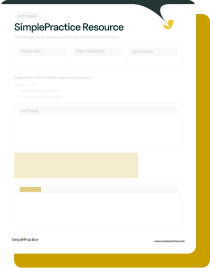
Download the emotion worksheet for kids
Download now
Download the emotion worksheet for kids
Download nowUse a printable feelings worksheet for kids as an engaging psychoeducational tool to help children identify, name, and understand their changing emotional states.
Teach young clients to connect bodily sensations to core emotions using this visual guide to build vital self-awareness and communication skills.
Combine this emotion worksheet for kids with tools like coping thermometers to help children safely navigate complex feelings and cognitive restructuring.
Provide this downloadable resource to parents and caregivers to reinforce emotional regulation, validation, and expression practices in the home environment.
Using tools like a feelings worksheet for kids has many benefits, including helping children understand their emotions and strengthen their communication and social skills.
This article provides an overview of emotions and how to explain emotions to children. It also includes a free downloadable emotions worksheet for kids that you can save to your electronic health record (EHR) and use in your practice.
While definitions of emotions differ, they can be broadly defined as a conscious mental state that guides physical and behavioral responses to what is happening around us, helping us survive, experience frustration, feel achievement, experience pleasure, and feel the sadness of loss.
Even though everyone experiences emotions, they may respond to triggers differently. These reactions may be partially involuntary and include facial expressions, muscle tension, and changes in heart rate.
However, research shows people feel certain emotions in specific body regions. For example, sadness feels heavy in the chest, and fear is often experienced as chills, muscle tension, or numbness.
Emotions can also motivate change. As emotions elicit a range of short-term pleasurable and non-pleasurable feelings, they can act as a motivator to understand better why we feel a certain way and whether we need to adapt our behavior to avoid unpleasant feelings in the future.
While emotional theorists differ in the exact number of basic emotions, many psychological tools, like the wheel of emotions, are based on eight core emotions, including:
Sadness
Happiness
Surprise
Fear
Anger
Disgust
Anticipation
Trust
When adapted for children, visual tools and emotion worksheets for kids like the feelings wheel might name emotions such as happy, sad, worried, excited, scared, confused, angry, bored, surprised, or embarrassed.
Preschool kids may see the list of emotions further simplified to include happy, sad, worried, angry, or excited, with accompanying facial expressions.
As children develop, they experience more complex feelings but may feel confused and struggle to identify and express them.
Therapists and parents can help children understand their emotions by talking to them in an easy-to-understand way.
Some ways to explain emotions to a child might include:
Explain that emotions are what we feel. They help us understand what’s happening around us. They might be telling us something, so it's helpful to listen and talk about your feelings.
Basic emotions include sadness, happiness, anger, fear, confusion, boredom, love, and surprise. For example, you might feel happy to see your friend at school but sad when playtime ends.
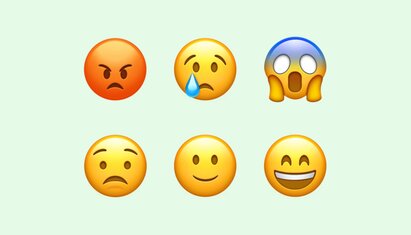
Visual tools like an emotion faces chart can help kids identify their feelings.
Therapists can download and use the feelings worksheet for kids in several ways:
Use the emotion worksheet for kids as a psychoeducational prompt to explain the concept of interoception and how to identify emotions.
Combine the handout with other worksheets, like our emotion faces chart, anger management worksheet for children, or feelings thermometer, to help kids identify their feelings and triggers and support them in finding ways to express them.
The feelings worksheet for kids can be used as an icebreaker activity at the beginning of the session to help clients identify their feelings.
You could give the worksheet to parents to help the child practice expressing their emotions at home.
Identify emotions with related unhelpful thoughts and demonstrate cognitive restructuring techniques.
Share the emotion worksheet for kids with coworkers.
Print the worksheet and leave out copies in your waiting room or therapy space.
American Psychological Association. (n.d.). Emotions.
Dennison, J. (2024). Emotions: Functions and significance for attitudes, behaviour, and communication. Migration Studies.
Center for Early Childhood Mental Health Consultation. (n.d). Ideas for Teaching Children about Emotions. Georgetown University Center for Child and Human Development.
Hartmann, M., Lenggenhager, B., & Stocker, K. (2023). Happiness feels light and sadness feels heavy: introducing valence-related bodily sensation maps of emotions. Psychological research.
Nummenmaa, L., Glerean, E., Hari, R., & Hietanen, J. K. (2014). Bodily maps of emotions. Proceedings of the National Academy of Sciences of the United States of America.
SimplePractice is HIPAA-compliant practice management software with everything you need to run your practice built into the platform—from booking and scheduling to insurance and client billing.
If you’ve been considering switching to an EHR system, SimplePractice empowers you to run a fully paperless practice—so you get more time for the things that matter most to you.
Try SimplePractice free for 30 days. No credit card required.






Proudly made in Santa Monica, CA © 2026 SimplePractice, LLC
Proudly made in Santa Monica, CA © 2026
SimplePractice, LLC