Apology worksheet


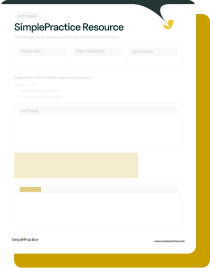
Download the free guilt worksheets
Download nowDistinguish between prosocial guilt and self-evaluative shame to help clients understand when emotions motivate repair versus withdrawal.
Use these guilt worksheets to facilitate cognitive restructuring by challenging unrealistic expectations and unhelpful thought patterns.
Implement specific reflection prompts that encourage patients to view their actions through the lens of self-compassion and core personal values.
Enhance clinical practice by integrating guilt therapy worksheets into collaborative sessions, group therapy, or as assigned homework between appointments.
Apply evidence-based CBT strategies to help individuals process moral violations and develop actionable plans for restitution and acceptance.
Guilt and shame are two powerful emotions that guilt worksheets can help address in clinical settings.
These emotions can lead to feelings of worthlessness, self-blame, and maladaptive thoughts and behaviors.
Guilt therapy worksheets give clients tools to challenge and reframe unhelpful thoughts and emotions.
This article provides an overview of the differences between guilt and shame. We’ve also included a free downloadable guilt worksheet that you can upload to your electronic health record (EHR), along with examples of how guilt therapy worksheets support cognitive restructuring.
While closely related emotions, guilt and shame are distinct in terms of how they are experienced.
Guilt arises when a person does something wrong, which violates their moral code, leading to feelings of discomfort.
In contrast, shame is a negative self-evaluation that can arise from something a person has done or failed to do, or simply from how they perceive themselves—their appearance, background, or identity—which causes painful feelings of unworthiness.
Shame can cause people to withdraw, lash out at others, or deny their feelings and actions. Guilt, on the other hand, is a prosocial behavior and motivates repair.
The following examples of behaviors or actions that may lead to feelings of guilt are commonly explored in guilt therapy worksheets:
Canceling plans with a friend because they're exhausted but lying about the reason
Cheating on a partner
Withholding information
Dishonesty
Resting instead of fulfilling responsibilities or chores (though this may also reflect anxiety or burnout rather than a genuine moral violation)
Not visiting relatives or friends as regularly as they would like
Having too limited time to spend with their children and feeling like a failure as a caregiver
Misbehavior or talking poorly about another person
Not going to the gym or eating a meal that is inconsistent with their health goals
Failing to meet expectations at work or school, such as not completing their part of a project or assignment
Understanding the distinction between guilt and shame is the foundation of any effective guilt worksheet.
These guilt therapy worksheet prompts may help explore feelings of guilt, their origins, and ways to challenge and reframe unhelpful thinking.
Describe the event that led you to feel guilty.
What thoughts did you have? For example, “I am a bad person for lying to my partner.”
What was the outcome of your actions?
How do you think you harmed, hurt, or disappointed the other person?
What feelings arise when you think about that situation and your guilt?
Which morals or personal values did your action or behavior violate?
How could you have acted differently?
Are your feelings of guilt based on reasonable standards or unrealistic expectations?
What evidence do you have that supports those standards?
How would a loved one or someone you admire view this situation?
What would you tell a friend who was in your position?
Reflecting on how you’d treat someone you love in this situation, what is a more helpful way to think about what happened?
If you did harm someone by reasonable expectation, what can you do to put the situation right?
What lessons did you learn from this experience?
What positive actions can you take to find acceptance or self-compassion about this situation and let go of the feelings of guilt?
These questions form the core of an effective guilt worksheet and can be adapted for individual or group settings.
You can download and use the guilt therapy worksheet in several ways.
One option is to provide psychoeducation using the guilt vs. shame worksheet.
Complete the worksheet collaboratively during the session and provide the client with a copy to take home. Then, ask the client to reflect on the worksheet and complete the reflection questions between sessions, and report their findings at their next therapy appointment.
In group therapy sessions, you can use the prompt questions to create a CBT guilt worksheet, encouraging clients to share more about times they’ve experienced guilt or shame with other participants.
This guilt worksheet also pairs well with other emotion-related worksheets, including our list of emotions worksheet, DBT for emotional regulation worksheets, and emotion scale.
Share the guilt worksheet with coworkers, leave copies in your office for clients to review, or use it to provide training to interns or supervisees.
Regardless of how you use it, a guilt therapy worksheet is a versatile tool for supporting clients at any stage of treatment.
American Psychological Association. Transform Your Guilt and Shame.
American Psychological Association. (2005). Guilt can do good.
Brown, B. (2013). Shame vs. Guilt.
Luck, T., & Luck-Sikorski, C. (2022). The wide variety of reasons for feeling guilty in adults: Findings from a large cross-sectional web-based survey. BMC Psychology.
Young, K., Chessell, Z. J., Chisholm, A., Brady, F., Akbar, S., et al. (2021). A cognitive behavioural therapy (CBT) approach for working with strong feelings of guilt after traumatic events. The Cognitive Behaviour Therapist.
Stewart, C. A., Mitchell, D. G. V., MacDonald, P. A., Pasternak, S. H., Tremblay, P. F., & Finger, E. (2023). The psychophysiology of guilt in healthy adults. Cognitive, affective & behavioral neuroscience.
SimplePractice is HIPAA-compliant practice management software with everything you need to run your practice built into the platform—from booking and scheduling to insurance and client billing.
If you’ve been considering switching to an EHR system, SimplePractice empowers you to run a fully paperless practice—so you get more time for the things that matter most to you.
Try SimplePractice free for 30 days. No credit card required.






Proudly made in Santa Monica, CA © 2026 SimplePractice, LLC
Proudly made in Santa Monica, CA © 2026
SimplePractice, LLC