Bipolar disorder chart


Published October 26, 2026
Download the mental health check-in worksheet
Download now
Download the mental health check-in worksheet
Download nowAre you a therapist looking for a mental health check-in worksheet to give to clients? You’re in the right place.
A mental health check-in worksheet helps clients track their sleep, mood, stress, and coping between sessions, and it gives you data to help guide treatment. Below, you’ll find the benefits of a daily check-in and example questions to suggest to clients.
We’ve included a free downloadable daily mental health check-in questions PDF to save to your electronic health record (EHR) and use in your practice.
Using a daily mental health check-in worksheet is a great way to empower clients to take charge of managing their mental health. By regularly recording information like symptoms, sleep quality, exercise, stress levels, alcohol use, triggers, medication adherence, energy levels, and mood, clients provide more data for both themselves and their providers. The data from a daily check-in can be used to:
Evaluate treatment efficacy: Keeping a record of mood, medication use, and adherence can help clinicians assess how well treatment, including medication, is working and determine if any adjustments are needed. In a 2025 systematic review of 20 qualitative studies, some people with bipolar disorder wanted to share their tracking data with clinicians to monitor treatment, including medication response over time. A 2026 meta-analysis of randomized controlled trials found no robust evidence that mood monitoring on its own changes mood symptoms, so the data works best as a guide for care.
Inform clinical assessment: Mental health logs can provide valuable data about the types of mood cycles or symptoms that clients experience and the impact on their lives. For instance, a client may report not feeling depressed in session, but the information on their mental health check-in may suggest they are experiencing moderate symptoms of depression.
Improve self-awareness: By logging symptoms and moods, clients gain valuable insights and a better understanding of their condition and triggers. For example, if they notice sleeping poorly one night and observe a connection with alcohol use, they may choose to cut back on evening drinking. In the same review, people with bipolar disorder described better insight into their mood patterns and potential triggers.
Help clients spot early warning signs: Clients with bipolar disorder may benefit from mood tracking because it can help them notice changes in symptoms sooner and share them with their clinician. In the same review, some people reported that tracking helped them recognize early warning signs and plan for relapse. Tracking can also feel burdensome, and in a 2025 meta-analysis of 77 studies, a small number of users reported increased stress or worsening mood, so ask how it is going.
Most mood or mental health check-in charts collect specific information across seven areas. Example questions for each are below.
Prompts may ask about the amount of sleep, restfulness, episodes of waking, nightmares, and the times going to bed and waking up. For example:
What time did you go to bed last night?
Did you wake up feeling refreshed?
How long did you sleep for?
How long did it take you to get out of bed?
Did you wake during the night? If so, how quickly did you get back to sleep?
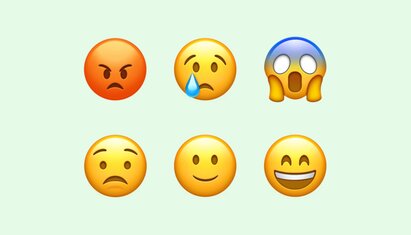
Questions about mood may vary depending on the type of mental health check-in. A bipolar mood chart may ask if the person’s mood is depressed, manic, or stable. Other check-in forms may ask if the individual is happy, sad, stressed, calm, angry, or feeling something else (and prompt to provide more information). For example:
How would you describe your mood today? For example, happy, sad, stressed, calm, or angry. Circle one.
These prompts identify stress levels and their potential effects on mood, sleep, and energy levels. For example:
How are your stress levels on a scale of one to ten, with ten being extremely stressed and one being not stressed at all?
What caused you to feel stressed?
How are you feeling the effects of stress on your body and mental health?
These prompts ask about physical activity. For example:
Have you moved your body today?
What did you do, and for how long? For example, “I walked to work for 30 minutes.”
These prompts seek to assess any rumination or stress-related thoughts. For example:
What thoughts are on your mind?
Have you been experiencing repetitive thoughts?
How have your thoughts impacted your mood and motivation today?
This area assesses how social support has influenced mood and energy levels. For example:
When was the last time you called or visited a friend?
Who can you call upon if you are struggling and need support?
Do you feel connected to a supportive community?
What might prevent you from reaching out to your friends?
These questions assess the coping strategies used and resilience to handle stress. For example:
What coping skills have you used today?
How often have you used substances to manage stress and mood?
How helpful have your coping skills been?
What area of coping would you like to improve?
You can download and use the mental health check-in worksheet in several ways:
Use the mental health check-in questions PDF to provide psychoeducation on how daily check-ins can help clients manage symptoms.
Complete the worksheet collaboratively in session and give the client a copy to take home.
Ask the client to complete the worksheet daily between sessions and report their findings at their next therapy appointment.
Use the mental health check-in questions PDF in group therapy sessions to encourage clients to share more about how they manage their mental health with other participants.
Combine this worksheet with other mental health worksheets, such as our daily mood chart, sleep diary template, behavior chart template, and cognitive-behavioral therapy (CBT) thought record.
Share the mental health check-in worksheet with colleagues or leave copies in your office for clients to take home or inquire about.
Use this worksheet to provide training to interns or supervisees on daily monitoring tools.
Astill Wright, L., Majid, M., Moore, M., Momoh, G., Patil, R., et al. (2025). The user experience of ambulatory assessment and mood monitoring in bipolar disorder: Systematic review and meta-synthesis of qualitative studies. Journal of Medical Internet Research.
Astill Wright, L., Monk-Cunliffe, J., Guo, B., & Morriss, R. (2025). Adverse events of mood monitoring and ambulatory assessment in depression and bipolar disorder: Systematic review and meta-analysis. JMIR Mental Health.
Astill Wright, L., Shajan, G., Purewal, D., Stone, J., Majid, M., et al. (2026). Mood monitoring, mood tracking, and ambulatory assessment interventions in depression and bipolar disorder: Systematic review and meta-analysis of randomized controlled trials. JMIR Mental Health.
SimplePractice is HIPAA-compliant practice management software with everything you need to run your practice built into the platform—from booking and scheduling to insurance and client billing.
If you’ve been considering switching to an EHR system, SimplePractice empowers you to run a fully paperless practice—so you get more time for the things that matter most to you.
Try SimplePractice free for 30 days. No credit card required.






Proudly made in Santa Monica, CA © 2026 SimplePractice, LLC
Proudly made in Santa Monica, CA © 2026
SimplePractice, LLC