Window of tolerance PDF


Published October 30, 2026
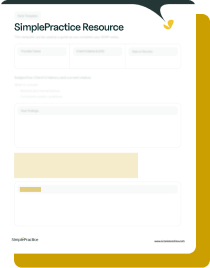
Download the rebuilding trust in a relationship worksheet
Download now
Download the rebuilding trust in a relationship worksheet
Download nowUsing a rebuilding trust worksheet can be a helpful tool in couples therapy.
This article provides an overview of trust in a relationship, how it's broken, and examples of how to repair trust.
We’ve included a free, downloadable rebuilding trust in a relationship worksheet PDF to save to your electronic health record (EHR) and use in your practice.
This rebuilding trust in a relationship worksheet PDF is designed for romantic partners and can be completed individually or together. If a client feels unsafe in their relationship, it may not be the right tool, so assess for safety before using it with a couple.
Trust is an essential component of any relationship. It is a deciding factor in whether we engage in any relationship, whether it is social, romantic, or professional. Being able to trust the other person allows us to feel safe enough to share our feelings, be vulnerable, and ask for help.
Building trust in a relationship takes time, often begins early on, and evolves throughout the relationship.
The key building blocks of trust include:
Reliability: Knowing that you can be relied upon when needed and that you’ll follow through on commitments.
Consistency: Acting and behaving consistently, showing that you are dependable and put effort into the relationship.
Accountability: Owning your actions and their impact, and repairing harm where appropriate.
Honesty: Being open and truthful about your thoughts, feelings, and needs and not withholding information.
Protecting privacy: Keeping the confidences of others when they share information with you.
Respecting boundaries: Honoring boundaries without question.
Understanding: Listening to and acknowledging others' perspectives without interrupting, blaming, or criticizing them.
Respect: Showing genuine regard for others and their perspective, even if you disagree with them.
Good faith: Giving others the benefit of the doubt when their intentions are unclear.
Congruence: Aligning your words and your actions.
Breaking trust in a relationship can be hurtful and may even cause significant damage. Romantic relationships require a deep level of trust, intimacy, and vulnerability, which can make broken trust even more painful and reactivate earlier attachment wounds.
Examples of how trust is broken in relationships include:
Sharing personal information without consent
Making false promises, such as promising to change but not following through with actions
Cheating on your partner, emotionally or sexually
Financial deception, such as spending your partner’s money without their knowledge or hiding debt
Withholding information
Emotional neglect or manipulation, such as inconsistent emotional availability and attunement (being responsive to a partner’s emotional needs), love bombing (overwhelming someone with affection to gain trust or control), abandonment, and stonewalling (shutting down or refusing to engage during conflict)
Hiding a problem, such as excessive substance use, gambling, or spending issues
Lying or being deceitful, such as texting an ex and deleting messages
Disrespecting boundaries
Criticizing your partner’s marginalized identities or disabilities during conflicts
Repairing trust takes time, openness, commitment, honesty, and continued effort from both people in the relationship. While each rupture and repair may be different, depending on how trust was broken and what happened, therapists can help couples start by exploring what was hurtful and how it affected the relationship.
From there, therapists can guide clients through these four steps:
Taking responsibility: Meaningful repair begins with clear, non-defensive accountability from the partner who broke trust, acknowledging the impact of their actions without caveats or blame-shifting. Once basic emotional safety is restored, both partners can collaboratively look at broader relational patterns or unmet needs that contributed to distance in the relationship.
Learning from the experience: Help partners treat the rupture as an opportunity to understand each other better and to explore any unmet needs in the relationship.
Making amends: Guide partners in identifying ways to repair the relationship, rebuild trust, and follow through on those actions. For some couples, that might mean regaining a sense of safety, and for others, it might mean more financial transparency.
Checking in: Encourage partners to communicate regularly with each other about the relationship, demonstrate transparency, follow through on promises, and respect boundaries.
You can download and use the building trust worksheets for adults in several ways:
Use the worksheet to provide psychoeducation about interpersonal skills, conflict, and repairing trust.
Complete a rebuilding trust exercise in the session and give the client a copy to take home.
Email a copy of the rebuilding trust in a relationship worksheet PDF to the client or couple.
Ask the client to reflect on the worksheet and complete the reflection questions between sessions and share their findings at their next therapy appointment.
Use the prompts in the worksheet in group therapy sessions to encourage clients to share more about how they have experienced broken trust and repair.
Combine this worksheet with other relational worksheets, such as:
Share the worksheet with coworkers or leave copies in your office for clients to take home.
Use the rebuilding trust in a relationship worksheet PDF to provide training to interns or supervisees on couples therapy or the importance of conflict and repair in relationships.
Brown, B. (2021). The anatomy of trust. Unlocking Us with Brené Brown.
Coleman, J. (2008). Surviving betrayal. Greater Good Science Center. University of California, Berkeley.
Hancock, P. A., Kessler, T. T., Kaplan, A. D., Stowers, K., Brill, J. C., et al. (2023). How and why humans trust: A meta-analysis and elaborated model. Frontiers in Psychology.
Yılmaz, C. D., Lajunen, T., & Sullman, M. J. M. (2023). Trust in relationships: A preliminary investigation of the influence of parental divorce, breakup experiences, adult attachment style, and close relationship beliefs on dyadic trust. Frontiers in Psychology.
SimplePractice is HIPAA-compliant practice management software with everything you need to run your practice built into the platform—from booking and scheduling to insurance and client billing.
If you’ve been considering switching to an EHR system, SimplePractice empowers you to run a fully paperless practice—so you get more time for the things that matter most to you.
Try SimplePractice free for 30 days. No credit card required.






Proudly made in Santa Monica, CA © 2026 SimplePractice, LLC
Proudly made in Santa Monica, CA © 2026
SimplePractice, LLC