Situational anxiety ICD-10 code


Published January 21, 2026
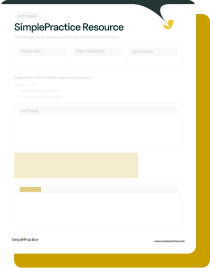
Download the free self-harm assessment tool
Download now
Download the free self-harm assessment tool
Download nowA self-harm assessment tool is an important resource to use in your therapy practice, as self-harm is more common than you may realize, particularly in youth.
According to the U.S. Centers for Disease Control and Prevention (CDC), adolescents and youth have high rates of emergency room visits for self-harm.
But data is limited, as not all non-suicidal self-injurious behavior (NSSI) is reported due to the stigma that surrounds it.
This article provides an overview of types of self-harm, the importance of screening for NSSI, and tips to use as part of a self-harm assessment checklist.
We’ve also included a free downloadable self-harm assessment tool for clinicians to save to their electronic health record (EHR) and use in their practice.
Self-harm, also known as non-suicidal self-injury (NSSI), is characterized by purposefully hurting the body, but not intending to be suicidal.
Some ways self-harm manifests include:
Cutting the skin
Burning
Scratching
Hitting or punching oneself
Piercing the skin with sharp objects
Carving symbols into the skin
Pulling hair
Picking at wounds
Sites of self-injury are typically on the hands, wrists, arms, stomach, and thighs. However, self-injury may occur anywhere on the body, which is why comprehensive self-harm assessment tools examine multiple areas of the body.
The effects of NSSI can be serious. In a 2011 study by Whitlock and colleagues, researchers reviewed eight colleges and universities found that one in four repeat self-injurers (25%) reported hurting themselves badly enough that they should have seen a physician, but only 5% of those with NSSI sought medical assistance for their wounds.
NSSI is most common among adolescents and young adults. Lifetime rates of NSSI are about 15% for college students and 17% for adolescents, whereas about 5% of adults report a lifetime history of NSSI.
Research on NSSI also shows:
Rates of self-injury are highest among psychiatric populations, particularly in individuals who report depression, anxiety, and emotional dysregulation. It is most common among those prone to self-criticism. A self-harm assessment tool can help identify these risk factors in clinical settings.
Self-injury occurs at significant rates in both sexes, with some research suggesting women may be more likely to self-injure. Studies show differences in motivations, with females more likely to self-injure when upset, and males more likely to report anger or intoxication as triggers.
NSSI is more common in people who report non-heterosexual orientations (such as people who identify as gay, bisexual, and questioning). It’s important to consider these demographic patterns when using a self-harm assessment checklist.
Among adolescents and youth, research shows:
One study reviewing 172 datasets with participants in 41 countries found an overall prevalence of NSSI at 16.9% among adolescents.
The mean starting age for NSSI was 13 to 14 years, with 47% reporting between one and two episodes. The most common reason for NSSI was to relieve distressing thoughts and feelings.
Suicidal ideation risk ratio was 4.97, and the attempt risk ratio was 9.14. Risks were significantly higher in adolescents who self-harmed, particularly among those with more frequent episodes of self-harm.
Data from the CDC reports high rates of emergency department visits for self-injury among youth and young adults aged 10 to 24. In 2020, there were 224,341 visits to the ED among this group, with females at a higher risk than males.
In 2020, ED visits among girls were double the rate compared to 2001.
These statistics underscore the importance of using a self-harm assessment tool or self-harm assessment checklist in clinical settings.
When using a self-harm assessment tool or self-harm assessment checklist, clinicians should evaluate common risk factors for NSSI, which include:
Being bullied or rejected by peers
Sexual orientation
Family history of mental health disorders
Impulsivity or being prone to impulsive and risky behaviors
People prone to depression, emotional distress, hopelessness, dissociation, and not knowing how to cope with particular emotional states
The ability to endure pain
Low self-worth
Tendency to objectify or poor regard for the body
Co-occurring mental health conditions, like eating disorders or borderline personality disorder
When using a self-harm assessment tool, consider the following risk and protective factors in your evaluation:
Emotional and mental health
Are they experiencing signs of depression, anxiety, or other mental health concerns?
Are they experiencing overwhelming stress, trauma, or personal difficulties?
Have they been diagnosed with a mental health condition?
Social and environmental factors
Do they have a support system (friends, family, partner)?
Are they experiencing social isolation or relationship issues?
Are there any recent life changes (loss, trauma, abuse, financial difficulties)?
Coping strategies and support
What are their current coping mechanisms?
Are they engaging in mental health support (therapy, counseling, crisis services)?
Do they have a safety plan in place?
Next steps
Refer to higher acuity support if necessary.
Develop a crisis plan and provide clients with a list of their emergency contacts and resources.
Encourage open communication and follow-up support, such as increasing the frequency of sessions and following up by phone.
You can download and use our self-harm assessment tool and checklist in several ways.
For example, print or screen share the self-harm questionnaire and use it as a session as part of your intake assessment, or to prompt further discussion when recognizing the presence of risk factors for self-injury.
You can also include the self-harm risk assessment tool PDF as part of your intake paperwork for the client to complete before their appointment.
Or, use the self-harm assessment checklist or assessment in supervision sessions or as part of onboarding training.
Child & Adolescent Mental Health Echo for Native American Youth. (2022). Assessing for Suicidal Ideation and Self-Harm Behavior.
Centers for Disease Control and Prevention. (2025). Health Disparities in Suicide.
DeAngelis, T. (2015). Who self-injures? American Psychological Association.
Gillies, D., Christou, M. A., Dixon, A. C., Featherston, O. J., Rapti, I., et al. (2018). Prevalence and Characteristics of Self-Harm in Adolescents: Meta-Analyses of Community-Based Studies 1990-2015. Journal of the American Academy of Child and Adolescent Psychiatry.
Klonsky, E. D., Victor, S. E., & Saffer, B. Y. (2014). Nonsuicidal self-injury: what we know, and what we need to know. Canadian journal of psychiatry.
Sansone, R. A., & Sansone, L. A. (2010). Measuring self-harm behavior with the self-harm inventory.
Whitlock, J.L., Exner-Cortens, D. & Purington, A. (2014). Assessment of nonsuicidal self-injury: development and initial validation of the Non-Suicidal Self-Injury-Assessment Tool (NSSI-AT).
Whitlock, J., Muehlenkamp, J., Purington, A., Eckenrode, J., Barreira, P., et al. (2011). Nonsuicidal Self-injury in a College Population: General Trends and Sex Differences. Journal of American College Health.
SimplePractice is HIPAA-compliant practice management software with everything you need to run your practice built into the platform—from booking and scheduling to insurance and client billing.
If you’ve been considering switching to an EHR system, SimplePractice empowers you to run a fully paperless practice—so you get more time for the things that matter most to you.
Try SimplePractice free for 30 days. No credit card required.






Proudly made in Santa Monica, CA © 2026 SimplePractice, LLC
Proudly made in Santa Monica, CA © 2026
SimplePractice, LLC