Exposure and response prevention worksheet


Published August 25, 2026
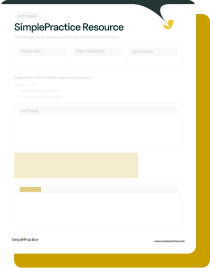
Download the body dysmorphic disorder psychoeducation worksheet
Download now
Download the body dysmorphic disorder psychoeducation worksheet
Download nowMany clients share insecurities about their body image, but at what point does it become body dysmorphic disorder?
This body dysmorphic disorder psychoeducation handout provides an overview of a healthy body image, factors influencing self-perception, body dysmorphic disorder, signs to look out for, and treatment options.
We’ve included a free downloadable body dysmorphic disorder PDF to save to your electronic health record (EHR) and use in your practice.
Body image is a construct relating to how we see, think, and feel about our appearance, and how we behave as a result of our body image—concepts explored further in our body image info sheet. This perception, together with sociocultural influences, has the potential to either negatively or positively influence physical and mental well-being.
For example, holding a negative perception of one's appearance is a risk factor for eating disorders and mental health concerns. However, looking at one's body through a positive lens, by appreciating and accepting the body as it is, is associated with well-being, higher self-esteem, and a healthy outlook.
Signs of a healthy body image in a client may include:
Looking in the mirror and liking how they look
Appreciating their unique qualities
Being able to name a favorite body part
Not speaking negatively about other people's bodies
Recognizing that social media distorts body image
Not comparing their appearance to other people
Posting realistic pictures of themselves on social media instead of trying to appear "perfect"
Not equating beauty with body size
When people become overly concerned with their appearance and it impacts their behaviors and quality of life, they may be experiencing body dysmorphic disorder.
Body dysmorphic disorder is a mental health condition characterized by a preoccupation with body image and perceived flaws, and behaviors or rituals to reduce body appearance-related anxiety.
While most people think of themselves as having flaws or are dissatisfied with areas of their body, BDD causes distress and significantly affects the person's day-to-day functioning, including an increased risk of suicide. However, according to researchers, the diagnosis is often missed.
The key signs of body dysmorphic disorder include:
Preoccupation with a perceived defect or markedly excessive concern with a slight physical anomaly related to hair, skin, nails, body shape, and any other area of their body or appearance
Ritualistic behaviors, like excessive mirror checking or avoiding mirrors
Covering or camouflaging the area of concern with makeup, clothes, or hats
Refusing to have their photograph taken
Avoiding social events
Expressing concerns about appearance, calling out features as too small, big, or crooked
Not leaving the house
Believing others may be as disgusted by their appearance as they are
Seeking reassurance from others
Excessive grooming
Overexercising
Comparing themselves to others
Significant distress and/or functional impairment
Visiting multiple healthcare providers about their appearance
Seeking plastic surgery and other cosmetic procedures
Feeling anxious or depressed
Suicidal thoughts
Symptoms can cause significant distress or impair daily life, relationships, or overall functioning. While rituals and behaviors may temporarily relieve the appearance-related anxiety, concerns return shortly after.
Recognizing these signs early is a core part of body dysmorphic disorder psychoeducation for both clients and the providers supporting them.
Effective treatment for body dysmorphic disorder includes:
Cognitive behavioral therapy (CBT): Studies show that CBT reduces the severity of BDD and related symptoms, including depression. CBT involves body dysmorphic disorder psychoeducation, identifying and challenging unhelpful thoughts about their appearance, and developing coping strategies to interrupt rituals and avoidance behaviors.
Medication: Selective serotonin reuptake inhibitors (SSRIs) are considered a first-line treatment for BDD. SSRIs are antidepressants, and they can treat the disorder and associated compulsive behaviors, as well as anxiety, depression, and other conditions.
You can download and use the body dysmorphic disorder psychoeducation handout in several ways:
Use the worksheet to provide body dysmorphic disorder information to clients.
Use the handout as a body image info sheet in group therapy sessions to encourage clients to share more about their body insecurities with other participants.
Share the body image info sheet with coworkers.
Review the “What is body image disorder?” handout with interns or supervisees.
Association for Behavioral and Cognitive Therapies. (n.d.). Body dysmorphic disorder.
Hartman, A., Greenberg, J., & Wilhelm, S. (2013). A therapist's guide for the treatment of body dysmorphic disorder. International OCD Foundation.
Johns Hopkins Medicine. (n.d.). Body dysmorphic disorder.
Merino, M., Tornero-Aguilera, J. F., Rubio-Zarapuz, A., Villanueva-Tobaldo, C. V., Martín-Rodríguez, A., et al. (2024). Body perceptions and psychological well-being: A review of the impact of social media and physical measurements on self-esteem and mental health with a focus on body image satisfaction and its relationship with cultural and gender factors. Healthcare (Basel, Switzerland).
National Eating Disorders Association. (2005). Ten steps to positive body image.
National Eating Disorders Collaboration. (n.d.). Body image. Eating Disorders Explained.
Presutti, B. (n.d.). Body image workbook. K-State University CAPS.
Rodgers, R. F., Laveway, K., Campos, P., & de Carvalho, P. H. B. (2023). Body image as a global mental health concern. Global Mental Health (Cambridge, England).
Singh, A. R., & Veale, D. (2019). Understanding and treating body dysmorphic disorder. Indian Journal of Psychiatry.
SimplePractice is HIPAA-compliant practice management software with everything you need to run your practice built into the platform—from booking and scheduling to insurance and client billing.
If you’ve been considering switching to an EHR system, SimplePractice empowers you to run a fully paperless practice—so you get more time for the things that matter most to you.
Try SimplePractice free for 30 days. No credit card required.






Proudly made in Santa Monica, CA © 2026 SimplePractice, LLC
Proudly made in Santa Monica, CA © 2026
SimplePractice, LLC