Exposure and response prevention worksheet


Published October 16, 2026
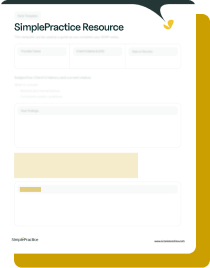
Download the bullying worksheet for kids
Download now
Download the bullying worksheet for kids
Download nowAnti-bullying worksheets can help children and teens recognize bullying and learn how to respond.
This article provides an overview of bullying, therapeutic activities for bullying, and tips on how to use the bullying worksheet for kids with clients.
We’ve included a free downloadable bullying worksheet for kids that you can save to your electronic health record (EHR) and use in your practice.
Bullying is unwanted, aggressive behavior that involves a real or perceived power imbalance and is repeated or highly likely to be repeated over time. The person who bullies has an advantage over the target, such as social status, physical strength, or a psychological or intellectual advantage. Bullying may be physical, verbal, relational, or electronic and often involves more than one person, such as the target, the person who bullies, bystanders, or someone who both is bullied and bullies others.
The effects of bullying can be significant, impacting physical and mental health. In one national survey, teenagers who were bullied were nearly twice as likely to have symptoms of anxiety or depression as teens who weren’t. A review in Archives of Disease in Childhood identifies bullying as a major risk factor for poor physical and mental health that can extend into adulthood. Kids who are bullied also often have physical complaints, like headaches and stomachaches, and may miss school frequently due to stress.
When explaining bullying to children, you might describe it as unwanted, aggressive behavior that hurts others. It can be verbal, physical, relational, or online, and might look like:
Verbal: This includes name-calling, spreading rumors or lies, threatening someone to keep secrets, scaring others, and making fun of someone’s grades, family, or how they look or sound.
Physical: This includes kicking, pushing, hitting, poking, tripping, hair pulling, or spitting on someone, forcing them to play games they don’t want to play, and taking or hiding their belongings, like money or things from their school bag.
Relational: This includes leaving someone out of group games or activities on purpose and getting someone in trouble with a teacher or classmates.
Cyberbullying: This includes sending hurtful messages, emails, or pictures online or by text, and sharing embarrassing photos or videos without permission.
Bullying might make a person feel lonely, scared, or upset, and not want to go to school. They might also get headaches or stomachaches.
Bullying worksheets for kids educate children and teens by describing common examples of bullying, how it might feel to be bullied, and what action to take if they or someone they know is being bullied.
Bullying therapy activities may include:
Education about bullying: Use bullying worksheets or a visual aid to help kids identify bullying.
Emotion identification: Ask children to name their emotions and how they feel using tools like a feelings wheel, an inside/outside mask activity, or an emotions faces chart.
Coping strategies: Help kids practice setting boundaries with the person who is bullying them, disengaging from them, and sharing concerns with an adult.
Depending on the child’s age and consent, therapy may also involve talking to parents or caregivers about concerns that the child is being bullied, problem-solving together, and involving the school counselor if needed.
You can download and use the bullying worksheet in several ways:
Use the bullying worksheets for kids to provide psychoeducation about bullying.
Complete the worksheet in session as a bullying therapy activity and give the client a copy to take home.
Ask the client to reflect on the worksheet between sessions and report their findings at their next therapy appointment.
Use the bullying scenarios worksheet in group therapy sessions to encourage clients to identify bullying and brainstorm how to respond.
Combine this worksheet with other worksheets for children, including our feelings wheel for kids, stress worksheets for kids, child anxiety worksheets, and boundaries worksheet.
Share the worksheet with coworkers or leave copies in your office.
Use this worksheet to provide training to interns or supervisees on bullying and bullying therapy activities.
Association for Behavioral and Cognitive Therapies. (n.d.). Bullying for mental health professionals.
Blueprints for Healthy Youth Development. (n.d.). Steps to Respect.
Centers for Disease Control and Prevention. (2024). Bullying. Youth Violence Prevention.
Committee for Children. (2005). The three Rs of bullying. Steps to Respect curriculum, level 2, lesson 7.
Haile, G., Arockiaraj, B., Zablotsky, B., & Ng, A. E. (2024). Bullying victimization among teenagers: United States, July 2021–December 2023. National Center for Health Statistics.
U.S. Department of Health and Human Services. (2024). What is bullying. StopBullying.gov.
Wolke, D., & Lereya, S. T. (2015). Long-term effects of bullying. Archives of Disease in Childhood.
SimplePractice is HIPAA-compliant practice management software with everything you need to run your practice built into the platform—from booking and scheduling to insurance and client billing.
If you’ve been considering switching to an EHR system, SimplePractice empowers you to run a fully paperless practice—so you get more time for the things that matter most to you.
Try SimplePractice free for 30 days. No credit card required.






Proudly made in Santa Monica, CA © 2026 SimplePractice, LLC
Proudly made in Santa Monica, CA © 2026
SimplePractice, LLC