'What does recovery mean to you?' worksheet


Published November 18, 2026
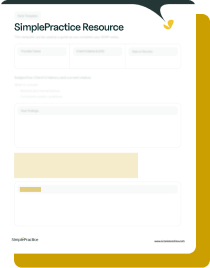
Download the expressing feelings worksheet
Download now
Download the expressing feelings worksheet
Download nowExpressing feelings and emotions can be particularly challenging for some clients, especially if this wasn’t modeled for them growing up.
This article provides an overview of understanding feelings and emotions, along with practical tips for working with clients.
We’ve included a free downloadable expressing feelings worksheet to save to your electronic health record (EHR), along with ideas for pairing it with other expressing emotions worksheets for adults.
Learning to understand feelings and emotions is a normal part of childhood development. Children learn how to process their feelings, regulate their emotions, and communicate with others. However, not everyone experiences this kind of modeling at home, especially in households with conflict and poor communication between parents. Children who don’t learn these skills may struggle with emotional regulation, which a 2007 review links to emotional and behavioral problems.
Signs a person may struggle to understand or express their feelings include:
Staying silent or withdrawing instead of expressing feelings
Having difficulty naming how they feel
Being unable to describe different emotions or how they feel in the body
Shutting down or checking out when asked about feelings
Avoiding conversations about feelings
Using evasive language, such as “fine” or “don’t worry about me”
Having difficulty setting and enforcing boundaries with others
Fearing conflict or rejection, which leads to passive communication and withholding true feelings
Struggling with vulnerability in relationships
Believing that sharing feelings will lead to consequences, such as abandonment
Experiencing anger and frustration without knowing how to manage them effectively
Turning to distractions when uncomfortable
Appearing guarded, distant, or hard to read
Avoiding eye contact (which can also reflect culture or neurodivergence)
Saying things like “feelings are pointless or irrelevant to this discussion” or “why are you being so emotional?”
Difficulty identifying and describing feelings, known as alexithymia, is also associated with depression and physical symptoms.
Identify feelings and emotions: Emotions provide information and cues about the environment. For example, anger can signal that a boundary has been crossed. Emotions also signify that something is meaningful. For instance, anxiety during a job interview may reflect how much a client wants to make a good impression. Clients can explore their feelings by using a list of emotions worksheet.
Share feelings: Encourage clients to share their thoughts and feelings about stressful experiences with someone they trust. A 2024 study of 111 people with chronic musculoskeletal conditions found that greater emotional expression was associated with better psychological well-being, although the effect was modest. A 2019 lab study of couples found that the effects of expressing feelings during a stressful task varied with how much a person typically copes through emotional expression and the support they received.
Try other forms of expression: Clients can use different means of emotional expression, such as a journal or a form of expressive art. Journaling prompts can ask clients to describe their day, what happened, any feelings they noticed, whether those feelings were pleasant or unpleasant, and what stressors they’ve experienced and how they’re handling them. A 2006 meta-analysis of 146 randomized studies found that written emotional disclosure has a small but significant benefit on average. Clients can also use the expressing feelings worksheet, which is available as a free download below.
Practice with people you trust: Clients who want to improve emotional expression in a relationship can role-play with their therapist or practice sharing with someone they trust, like a close friend or family member. Practicing lets clients ask for feedback and hear how the other person might approach discussing their feelings.
We’ve included these strategies in our downloadable communicating feelings worksheet below.
You can download and use the communicating feelings worksheet in several ways:
Use the emotional expression worksheet to provide psychoeducation about assertive communication.
Complete the expressing feelings worksheet collaboratively in session and give clients a copy to take home.
Ask clients to complete the reflection questions between sessions and share what they notice at their next appointment.
Use the getting in touch with emotions worksheet in group therapy sessions to encourage clients to share more about themselves with other participants.
Combine this communicating feelings worksheet with other communication and relational worksheets, including conflict resolution worksheets, assertive communication examples, I statements worksheet, and boundaries worksheet.
Share the expressing feelings worksheet with coworkers or leave copies in your office.
Use the communicating feelings worksheet to train interns or supervisees on interpersonal communication.
De Gucht, V., & Heiser, W. (2003). Alexithymia and somatisation: A quantitative review of the literature. Journal of Psychosomatic Research.
Demirel, Y., & Gülşen, M. (2024). The effect of expressing emotions on the psychological well-being of individuals suffering from chronic musculoskeletal diseases. New Emirates Medical Journal.
Frattaroli, J. (2006). Experimental disclosure and its moderators: A meta-analysis. Psychological Bulletin.
Kane, H. S., Wiley, J. F., Dunkel Schetter, C., & Robles, T. F. (2019). The effects of interpersonal emotional expression, partner responsiveness, and emotional approach coping on stress responses. Emotion.
Li, S., Zhang, B., Guo, Y., & Zhang, J. (2015). The association between alexithymia as assessed by the 20-item Toronto Alexithymia Scale and depression: A meta-analysis. Psychiatry Research.
Morris, A. S., Silk, J. S., Steinberg, L., Myers, S. S., & Robinson, L. R. (2007). The role of the family context in the development of emotion regulation. Social Development.
SimplePractice is HIPAA-compliant practice management software with everything you need to run your practice built into the platform—from booking and scheduling to insurance and client billing.
If you’ve been considering switching to an EHR system, SimplePractice empowers you to run a fully paperless practice—so you get more time for the things that matter most to you.
Try SimplePractice free for 30 days. No credit card required.






Proudly made in Santa Monica, CA © 2026 SimplePractice, LLC
Proudly made in Santa Monica, CA © 2026
SimplePractice, LLC