Fortune-telling cognitive distortions worksheet


Published September 30, 2026
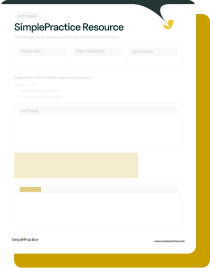
Download the free trauma response worksheet
Download now
Download the free trauma response worksheet
Download nowTrauma affects clients in a variety of ways. Not everyone who experiences trauma develops post-traumatic stress disorder (PTSD), but it can be helpful for clients to know what symptoms to look out for and to find a supportive way to process their traumatic experience.
This article provides an overview of common trauma responses and when clients should seek additional support.
We’ve included a free downloadable trauma response worksheet to save to your electronic health record (EHR) and use in your practice.
Trauma is the experience or witnessing of a distressing event, such as:
Accidents, such as a car accident
Crime, like a robbery
Child abuse, including physical, emotional, or sexual abuse
Physical assault, such as being attacked or mugged
Natural disasters, such as a hurricane, fire, or earthquake
Violence, like witnessing or experiencing intimate partner violence
Shootings, such as a school shooting or neighborhood shootings
Medical emergencies, such as a chronic or life-threatening diagnosis
Death
People can experience trauma in several ways, from a single event to repeated exposure. Common types include:
Single-incident trauma: Singular traumas include a motor vehicle accident, natural disaster, or sexual assault.
Chronic trauma: Repeated and ongoing trauma, like intimate partner violence or bullying and harassment at work.
Complex trauma: Prolonged exposure to multiple traumatic events, such as experiencing childhood neglect, discrimination, or bullying. Often, complex trauma starts in childhood and continues into adult experiences of trauma.
Vicarious trauma: Also known as secondary trauma, this type of trauma is experienced by helping professionals, such as first responders and social workers, or by family members supporting loved ones with PTSD.
Experiencing trauma can affect people in different ways. Trauma can have a significant physical, emotional, and psychological impact, causing individuals to feel a range of emotions, including:
Frightened
Anxious
Unsafe or under threat
Powerless
Abandoned
Humiliated
Trapped
Ashamed
Invalidated
Unsupported
Trauma survivors may also experience difficulty concentrating, feel angry, and replay the events in their mind.
These feelings can continue after trauma, but most people recover, and these common trauma responses can lessen over time. However, some individuals may go on to develop PTSD.
According to the Diagnostic and Statistical Manual of Mental Disorders, 5th edition, text revision (DSM-5-TR), a person may meet the diagnostic criteria for PTSD when trauma responses continue for more than a month after the trauma.
Clients should seek professional help if symptoms don't improve over time or begin to interfere with daily life. A mental health professional can assess whether symptoms meet the criteria for PTSD and recommend treatment, such as psychotherapy, medication, or both.
PTSD trauma responses fall into four symptom clusters, according to the DSM-5-TR:
This may include flashbacks, nightmares, upsetting memories, and emotional distress or physical reactivity when exposed to traumatic reminders.
This trauma response involves avoiding trauma-related triggers and reminders, such as the physical location of the traumatic event.
Clients may experience worsening negative thoughts or feelings after the traumatic event, like feeling angry or numb, being unable to remember all or part of the event, losing interest in activities, feeling isolated, and blaming themselves. They may also experience fewer positive emotions.
Symptoms include feeling tense or on edge, like being easily startled, irritable, or hypervigilant, and having difficulty sleeping. Trauma survivors may also engage in risky behaviors such as using drugs or drinking excessively.
You can download and use the trauma response worksheet in several ways:
Use the worksheet as a common reactions to trauma handout to provide psychoeducation about trauma and PTSD.
Ask the client to reflect on the worksheet between sessions and report their insights at their next therapy appointment.
Use the trauma response worksheet in group therapy sessions to encourage clients to identify PTSD trauma responses and other common trauma responses with participants.
Combine this worksheet with other trauma-related worksheets and articles, including how to deal with triggers from trauma, cognitive behavioral therapy (CBT) for PTSD worksheet, prolonged exposure therapy, and how to move through PTSD to post-traumatic growth.
Share the worksheet with coworkers or leave copies in your office.
Use this worksheet to provide training to interns or supervisees on trauma and PTSD.
Give the trauma response worksheet to a client's family members, partner, or loved ones to help them understand trauma responses.
American Psychiatric Association. (2022). Diagnostic and statistical manual of mental disorders (5th ed., text rev.). American Psychiatric Association Publishing.
American Psychological Association. (n.d.). Trauma.
American Psychological Association. (2019). PTSD treatment: Information for patients and families.
Kozlowska, K., Walker, P., McLean, L., & Carrive, P. (2015). Fear and the defense cascade: Clinical implications and management. Harvard Review of Psychiatry.
National Institute of Mental Health. (2024). Coping with traumatic events.
National Institute of Mental Health. (2024). Traumatic events and post-traumatic stress disorder (PTSD).
Walker, P. (2013). Complex PTSD: From surviving to thriving.
SimplePractice is HIPAA-compliant practice management software with everything you need to run your practice built into the platform—from booking and scheduling to insurance and client billing.
If you’ve been considering switching to an EHR system, SimplePractice empowers you to run a fully paperless practice—so you get more time for the things that matter most to you.
Try SimplePractice free for 30 days. No credit card required.






Proudly made in Santa Monica, CA © 2026 SimplePractice, LLC
Proudly made in Santa Monica, CA © 2026
SimplePractice, LLC